

Real Talk with Cindy
Keep on top with latest and exclusive updates from our blog on the Los Angeles real estate world. Cindy Bennett Real Estate posts about tips and trends for buyers, sellers, and investors every week. Whether it be about staging your property or a snapshot of the market, this is your one stop shop.

Happy New Year! 🎉 If buying or selling a home is on your 2025 goals list, you’re probably wondering: What’s happening in the Richmond real estate market? 🤔 Good news—Zillow and Realtor.com have named Richmond one of the fastest-growing and most competitive markets this year! But don’t panic! While competition is still strong, the market isn’t as extreme as during the pandemic. Home inspections are making a comeback, sellers are more open to negotiations, and multiple-offer situations are more manageable. In this video, I break down what’s really happening in the Richmond housing market—beyond the headlines—so you can make the right move with confidence! Whether you're buying, selling, or just planning, I’ve got you covered. 📲 Thinking about buying or selling? Let’s chat! Call, text, or email me, and let’s grab coffee to see if now is the right time for you.
Read more
It's January 2025. You're dreaming "This is the year I'm gonna make the move. This is the year that I'm gonna sell this starter home and get that dream home." Whatever it is, if you're thinking about selling your home, putting it on the market, making a move to somewhere else. Maybe you're thinking you need to wait until spring or don't know where to start. I'm here to break down the market for you as we head into 2025 so you can plan better and figure out how you're going to get your home to market. So first things first, I have mentioned in a previous video that both Realtor.com and Zillow just ranked Richmond and the Richmond area in the top 10 of the most competitive real estate markets for 2025. So if you're thinking of selling, that's fantastic news. That means there's more competition out there. There are more buyers. More people are going to be vying for your home. But, things have changed a little bit from the pandemic days of 25 buyers rushing to your house and buying anything even you know, "There's no roof. Who cares? We want it anyway." Those days are over. The best way to get your home in front of the most people who are going to actually want to buy it, and get those people taking out their proverbial pens and signing on the dotted line is to make sure your home is ready to go to market, that it's going to show best, that it's ready for prom, ready for prime time, whatever analogy you want to use, that that home is showing the best that it possibly can to those buyers the moment they walk in the door and the best time to do that, even if you're thinking of waiting to spring, is now. So whether you're in the Richmond area (I would love for you to call me) but whatever market you're in, call your local agent who is familiar with your neighborhood, your area, the sales in that neighborhood or area, and get them to come out, give you an idea of the things that you need to do to get your home on the market. A lot of the things that you need to do, you can really start doing now, so if you're thinking about putting your home on the market in March or April, you're going to have them all ready. All the little painting jobs, all the RE mulching, all of the checking to make sure all the light bulbs are the same so the light is consistent throughout the house. These little things matter, and they'll make a big difference when buyers come to take a look at your house, and trust me, if everybody falls in love with it, you will be one of those multiple-offer homes. And while you may not get $100,000 over asking price, you may get an offer that just perfectly meets the terms and the price that you want to achieve to get you where you want to go. So if you're thinking about selling, even if it's in the spring, summer, or fall, and you're in the Richmond metro area, give me a call now and we can start that process, so you know exactly what you need to do to be ready. Give me a call, send me a message, shoot me an email, and let's set up a time to chat. I look forward to talking to you.
Read more
If you are looking to buy a home, you are probably going to see quite a few homes. What a lot of people don't know is what to pay attention to in each house to give you a clue(s) about the condition of the home before putting an offer in. Here are 10 things I think you should pay attention to when touring every home. The Ceilings The Roof The Heating and Cooling System(s) HVAC Return(s) The Floors The Gutters (or Water Dispersal System) Trees Around the House The Electrical Cracks Around Windows and Doors Weird Smells Have questions? Ready to talk real estate? Send me a message via Instagram at CindyBennettRealEstate or via my website!
Read more
One of the questions people ask when they're buying a home, is, when can I get a warranty? How much do warranties cost? Should I get a warranty when I'm buying a house? So interestingly enough, I feel like home warranties were much more prevalent on listings, homes that you were going to buy earlier in my career, 15 or 20 years ago. Interestingly, also, there are more warranty companies now than there were then. But should you get one? And when can you buy it? Do you have to do it when you're writing the offer on your house? So let's break that down a little bit. There are all types of different home warranty companies and they are not all the same. For the most part, a warranty is going to cost you between $500 and $1,000 or they're going to cost the seller that. There is a space on our contract here in central Virginia that says, I would like to buy a warranty, the seller is going to pay or the buyer is going to pay. So it gives you that opportunity when you're writing the purchase contract. But should you, or should you get the seller to pay? If you can get the seller to pay for it, why not? It's not even coming out of your pocket. If it covers any little thing, it makes a difference. Things that most home warranties will cover are things like your garbage disposal, HVAC system, your major electrical systems, some parts of plumbing, usually the water heater, and any sort of major systems in your house. Things that it won't cover are usually the things that happen all the time. The little water leaks. Your toilet overflowed and it rains down into your kitchen. Won't cover that. That is homeowners insurance or just out of your good old trusty pocket. I would always just investigate the warranty that you want to use and know that it's probably not going to cover every instance. Remember, you can buy it when you put the offer on the house, or the seller can buy it before. So sometimes you might see a listing that already has a home warranty attached, but also you can usually purchase the warranty within 30 days of closing for the same price that you would have gotten it for at closing. Now, you can buy them at almost any time. You could be living in the house for five years, and then just call up the warranty company on your old-timey phone and order one, and they're happy to do it. It's just going to be a matter of what it covers on the house and how much it costs you on a monthly or yearly basis. Whether or not it's worth it is really up to you. If you have any other questions about buying a home in the Richmond area, I'd love to talk to you. My name is Cindy Bennett. I am a Realtor with Maison Real Estate Boutique. I've been full-time in this industry for 21 years, and I would love to help you make your home dreams come true.
Read more
Let's discuss my top 10 questions to ask a potential listing agent when choosing someone to list your home. What is their experience and/or familiarity with the area where your home is located? What is their listing experience? What is their level of understanding of the forms and legalities? Are they personable? What is their marketing strategy? How well can they negotiate? How will they handle everything from contract to closing? What do you as the seller need to do? How do they communicate? Do they "play well" with others (agents, buyers, etc.)? Have questions? Ready to talk real estate? Send me a message via Instagram at CindyBennettRealEstate or here on my website.
Read more
"Is it the right time to buy a house?" As your friendly neighborhood real estate professional, I'm going to tell you, as with so many things, the answer is, it depends. What does it depend on? It depends on, obviously, your financial situation. Do you want to buy a house? Do you need to buy a house? Have you expanded/grown your family, or are you now an empty nester and you've just got too much house? Maybe you want to finally get that country house and have a huge garden and some chickens. Whatever it is, a lot of that 'is it a great time' question is answered with your actual feelings and idea of where you want your life to be. If we're looking only at the market, one of my opinions that I hold pretty strongly is that I think we have so much information out there now that's easily accessible, that sometimes we get all up in our head about the finances of buying and looking at our primary residence really as an investment, more so than it perhaps should be. Ultimately, you want to live somewhere that you're happy, that you feel safe, and that you can live the life that you want to live. Whether that's having a big garden or having no yard to mow. Think about the reasons that you might want to buy. Think about your finances. Talk to a local lender, who understands the prices and the market in your area, and contact a reputable, experienced realtor (me hopefully!) who can help you figure out and determine if it is a good time for you because what may be a great time for one person is often not a great time for someone else. I'm never going to make anyone buy a house if I even could, but if it's not a good time for you, I'm always going to tell you it's not. So if you're in the Richmond and surrounding area, I'd love to talk to you about whether it's a good time for you to buy. If you're looking in another market and you don't know a great real estate professional, I know lots and lots all across the country, so just reach out to me. I'd love to chat and see if it's a great time for you to buy.
Read more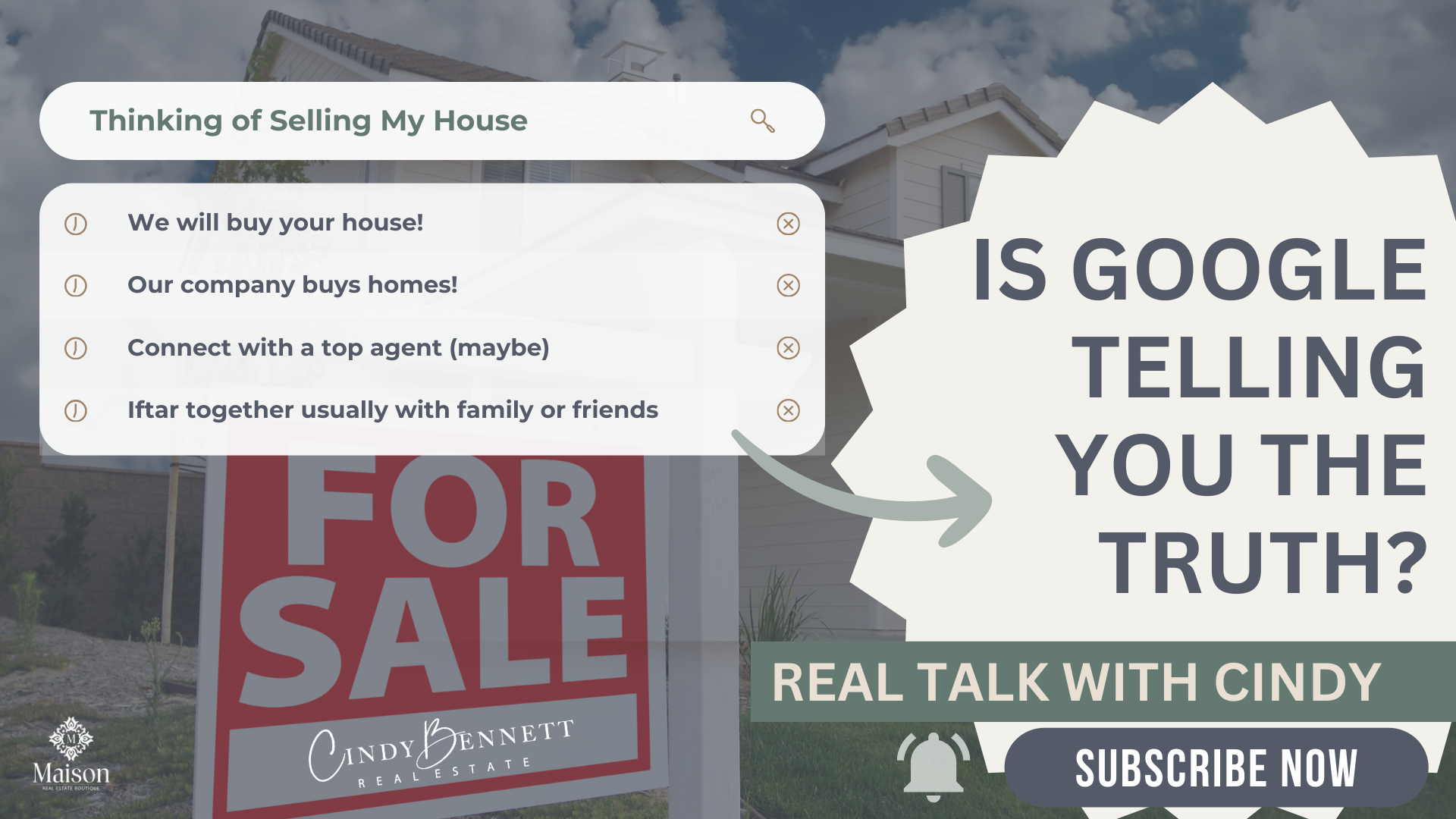
Everyone wants your home. At least that's what Google would have you believe. If you're thinking about selling your house, and you go on the good old Google and type in "home selling" or anything that sounds remotely like that, you're going to get a whole page of different companies. In most cases, it's not going to be great agents that could help you sell your home or a "how-to" guide. For the most part, you will get a page or two of companies that want to purchase your home for "market value" and so easy with no realtor. So a lot of these companies will tell you to just enter your address and they will make it so easy for you. You don't even have to clean. We'll come in and buy your house for market value. We'll close quickly, and then you know, you can move on with your life. For a lot of people, in a lot of financial situations, that can sound so appealing, but there are, with a lot of these companies, so many hidden fees. So if you're looking at doing that, make sure that you ask your questions. I would also encourage you to call a realtor that you trust that can look at all of that documentation and tell you if it is truly market value, or if you could, with just a little bit of effort, make a good amount of money more than those people will pay you, because in most cases, they're going to pay you less than market value. They're going to do very minimal repairs or painting, things like that and then they're going to put it back on the market for considerably more than they're going to pay you for your house. So while I don't have any problem with people making money, and sometimes, you know, you just need to get out and move on, I get it, but make sure that you understand the market and understand exactly what their fees are, because a lot of these companies do charge a good amount of fees, and in many cases, they're gonna get a home inspection and ask you to pay for repairs before you close. These things often show up when you are too far into the transaction to back out. So proceed with caution, when you're looking at a lot of these companies that come up when you're thinking about selling your home because nobody is giving you a free lunch, and if they're going to come in and make the deal super easy, they're going to get something from you in return. The next thing you'll see on Google are going to be lots of companies telling you that they can connect you to a great agent in your area. Keep in mind that in most of those cases, they are then going to get your information and sell it to an agent. In many cases, that agent will have to pay them 30%/40%/50% of the commission that they earn. I will also say in those cases, the vetting process is not always great. Sometimes it is not the best agent in your area. It's the agent who answered the text message saying we've got buyer leads or seller leads in your area."Do you want them? You just have to pay us a referral fee." Sometimes great agents respond to those, and often not great agents respond to them. So make sure that you're doing your due diligence, and don't just click on the first link that comes up on Google, because I can guarantee you it is not going to be the best thing for you. Do your homework. Give me a call. I'm always happy to read through information. Give you a little bit of advice if you're trying to figure out the best route to go. And I'll be honest, if somebody is going to give you a great deal on your house and you don't have to do anything for it, I'm going to tell you to take it. But in most cases, there's something else lurking behind there. So just, not only buyer beware, seller beware.
Read more
How much does it cost to sell a home anyway? The easiest answer to that, as in real estate often, is it depends. It depends on the house, the market, and a whole bunch of things. Below are some of the most common expenses (and their general associated cost) that you will see when you go to sell a home. Commission: This will be whatever has been negotiated in your listing agreement and/or purchase agreement. This is usually going to be your biggest chunk (aside from your mortgage payoff if you have one). Pre-Listing Expenses: Your Realtor® (hopefully me) will likely recommend you do a few things to get your home ready for market. This can be as simple as a new doormat or paint, but depending on your ability and willingness could be redoing floors or larger maintenance fixes. On average, you can usually expect to pay between $2k-5k. Attorney/Title Fees: Whether you are using a title company or attorney to handle your closing you will of course have to pay them. This is usually between $600-800. Sometimes a little less, sometimes a little more. Property Taxes: These are going to be prorated, so if you have just paid, you're going to get some of that back for the time after you've closed. If you haven't paid, you can rest assured that they're going to be on that settlement statement to be paid at closing. Grantors Tax: In Virginia, you will also have to pay this tax at closing. It is generally about 1% of the sales price of the home. That will get split between the city, county, state, etc. as essentially a "transaction fee" to the different government municipalities. Mortgage Payoff (if applicable): Most people will have a mortgage payoff at closing. This will also include any additional mortgages, home equity loans, etc. that you may have taken out over the years. Additional Fees: Your last fees are going to be those courier fees and wire transfer fees for those payoffs. Your lender and closing company are going to make sure that that payoff is up to the minute and to do that, they're going to put a rush fee on there. Generally, that will be between $200-300. All in all, when you go to sell your home, the largest chunk of money that you're going to spend is usually going to be in commissions and/or repair costs. Everything else is going to be, in most cases, between $1k-2k tops. So if you're thinking about selling and you want to know what your numbers shake out like, give me a call or send me a message. I'd love to talk to you and help you see if selling now or selling later makes more financial sense to you and to see where the numbers fall, so you have a good, accurate depiction of what the end of the day is going to look like and what you'll walk away with.
Read more
What do you mean I have to sign something just to see a house? I just want to see a house. If you're thinking of buying a house and you've been wanting to look at homes, or you have friends or family who are, this is probably something you've said or heard or have a little confusion about. I'm here to break it all down for you. This is a time of shifting and adapting in our industry, so a few things have changed. They're going to be taking effect this summer. So first things first, yes, you are going to have to sign a buyer brokerage agreement. No, it does not have to be for the rest of your life. You can sign a shorter-term agreement, but before you sign anything, make sure that you're working with an agent who is going to sit down and go through the document with you. Go through how they work and what they do. I never show a house without going through a whole buyer's consultation. Now, even if you've bought multiple homes over the years, you probably have not bought multiple homes this year. The forms, market, and even area are probably different. The home itself might be different. So having that buyer consultation is really going to help streamline the whole process for you and make it easier to understand. So yes, you will have to sign that, but please don't sign it without doing that buyer's consultation with the agent that you have chosen to represent you. And yeah, you can interview more than one. So if you have questions about signing the agreement, just know it is now the law. Nobody's trying to get one over on you, but make sure that you understand what you're signing and be kind. We are all trying to navigate this too. So if you call an agent and say, "Hey, I want to see 123, Main Street", and they say, "Hey, I need to sit down and talk to you first", understand that it's probably awkward for them too. We're all trying to figure it out, but as an industry and certainly, as individuals, our goal is to get you into the home that you love, whether it is your first house, your step-down house, your move-up house, or investment property. If you're working with an agent that has good integrity, they want you to understand what you're signing, so make sure they're taking the time to explain it. If you have any questions about it, reach out to me. Send me a message or give me a call, and let's talk through it. I'd love to help you find your next home.
Read more
Are you nose blind to those smells in your home? You may not want to put your house on the market until those smells have dissipated. Let's talk about how that may affect the sale of your home and what you can do to fix it. Have questions? Ready to talk real estate? Send me a message via Instagram at CindyBennettRealEstate or via my website www.cindybennett.net.
Read more