
When I was a kid growing up in suburban Chesterfield, my friend Diane lived in Westover Hills. I thought it was just about the coolest place I had ever seen.
Everything about it was different from what I knew and was used to. The houses had actual character and each was different from the next. There were sidewalks, real ones, everywhere. (So cosmopolitan!) And the whole neighborhood felt like it had a story, which of course it did. It had many stories, layered on top of each other, going back further than you might imagine.
I still feel that way about it. (Some things you get right as a kid.)
How These Neighborhoods Came to Be (Don’t You Love a Good Origin Story?)
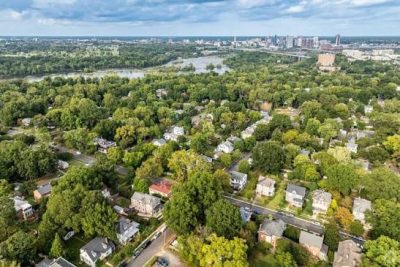
Woodland Heights and Westover Hills are two of three sister neighborhoods developed along the south bank of the James River, connected originally by the same trolley car line that ran out Forest Hill Avenue. They are not the same, but they are related by geography, by history, and most of all, by a shared character that is distinctly their own.
Woodland Heights is the oldest of the three. It was first advertised in 1891 as a “luxury riverside retreat,” when the south bank of the James was still mostly farms and woodlands along Old Manchester‘s western edge. (See what they did there?) The history goes deeper still, though. On May 4, 1888, Richmond made history when the world’s first real electric streetcar system began operations. That launched an era of real estate development tied to the newfangled mode of transport, and Woodland Heights was among the first neighborhoods established as a direct result.
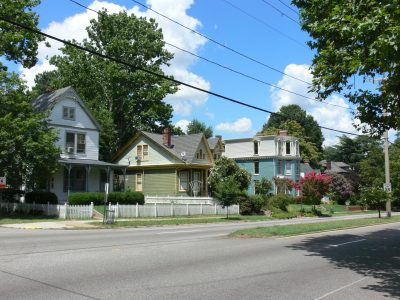 About three-quarters of the homes in Woodland Heights‘ 80-blocks were built between 1895 and 1935. The architecture reflects that era: Queen Anne Victorians, American Foursquares, Colonial Revivals, and Craftsman bungalows, along with Tudor Revival, Italianate, and Cape Cod homes woven throughout. Woodland Heights is listed on the National Register of Historic Places and the Virginia Landmarks Registry, which is no small thing. It means the bones here are not just old. They are considered worth preserving.
Westover Hills came a few decades later. The subdivision was laid out in 1928 by engineer James H. Saville, distinguished by its winding streets near the river, which give it that quality of feeling slightly apart from the rest of the city even when you are very much in it. Development accelerated following the construction of the Boulevard Bridge in 1925. Home styles range from Cape Cod and Colonial Revival Tudors on the eastern side, built primarily in the 1920s through 1950s, to midcentury ranch-style homes and newer traditional construction as you move west. Riverside Drive is an exception: spacious homes with direct views of the James River that still command the prices you would expect.
Diane’s mother used to call Westover Hills “the Windsor Farms of Dogtown.” I’m not sure why I remember that so well, but I do. Windsor Farms, if you’re not “from here,” has always been the gold-standard address north of the river: planned in the 1920s, architecturally significant, the kind of neighborhood where the streets curve elegantly and the homes have actual pedigree. Dogtown is what Southsiders called their side of the James, the old Manchester territory, with the particular pride of people who knew they had something good that the north bank never quite gave its due. (There is also no definitive “why” for Manchester being referred to as Dogtown, so that’s another story entirely.) Put those two things together and you get exactly what Westover Hills is: elegant design, lovely houses, south of the river.
Both Westover Hills and Woodland Heights are defined by something you feel before you consciously register it: the sidewalks. Wide, continuous, tree-lined sidewalks that connect you to everything within walking distance. They are not an afterthought here. They are the whole point. Kids ride bikes in the streets. Neighbors know each other. It functions, in the best and most old-fashioned sense, like a neighborhood.
The James River: Your Backyard
This is the part where I tell you that living in Westover Hills or Woodland Heights means you are essentially in the VIP section of the James River Park System. No exaggeration.
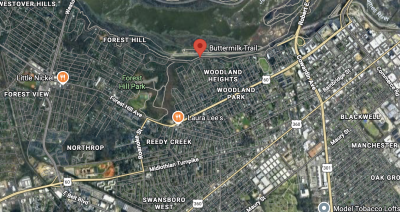
 The Buttermilk Trail, a four-and-a-half-mile hiking and biking path along the south bank of the river, is steps from your door. Forest Hill Park, one of Richmond‘s great green spaces and home to the beloved South of the James Farmers Market, is walkable. In winter, the hills above the river provide some of the finest sledding in the city, the kind of sledding that becomes a neighborhood tradition passed down from one generation to the next.
The James River is not just a backdrop here. It is a daily presence. You can walk to it, bike to it, or kayak on it. In a city that is rightly proud of its relationship with that river, these neighborhoods have some of the most direct access anywhere in Richmond.
The Commercial Corridor: Better Than It’s Ever Been
Forest Hill Avenue and Semmes Avenue have always had the bones of a great neighborhood commercial strip. What’s happened to those bones in recent years, though, is pretty exciting.
WPA Bakery (Well-Made Pastry Alliance) sits on Semmes Avenue in the heart of Woodland Heights and has been a neighborhood anchor since 2016. The canelés are the thing. A French pastry
with a caramelized, almost lacquered, outside and a custardy interior, they’re the kind of thing that sounds fussy until you have one and understand that it’s really like culinary alchemy (and how can they be gluten free and this delicious?) The pies, the sticky buns, the breakfast sandwiches on biscuits. This is a place that knows what it is and does it very, very well.
Stella’s Grocery, which sprouted from the award-winning Greek restaurant on Lafayette, now operates several gourmet market locations, including one serving the Westover Hills area, offering prepared foods, gourmet Greek products, baked goods, beer, wine, and more. It is the kind of neighborhood grocery that makes you feel like you are living exactly right. Get a coffee, a sandwich, dinner for later, or fill a bag with ready to go deliciousness for a gathering.
And then there is Väsen. Väsen Brewing Company, known for its Belgian farmhouse and sour ales with an experimental American craft sensibility, more recently opened their second location on Forest Hill Avenue, joining The Veil Brewing Co, which had already become a “go to” anchor for the area. The Forest Hill Väsen location includes ample outdoor seating, bike racks, at least sixteen draft taps, draft cocktails, and wine. On a warm Richmond evening with the river a short walk away, this is a very good situation to be in. (And guaranteed, where a lot of your neighbors are.)
There are a lot businesses choosing to expand south of the James, specifically to this corridor. That’s not a coincidence, but really, it’s a vote of confidence in a neighborhood that has always deserved it.
What the Real Estate Market Is Doing
The median sale price in Westover Hills has risen to the lower $600,000s, above Richmond‘s overall median and that of nearby communities. (The reality of being a “hot” area.) Homes sell in an average of sixteen days, which tells you everything you need to know about demand. Woodland Heights median prices have risen approximately 15% over the past year, with homes moving in about eighteen days on average.
What buyers are paying for is a combination that is genuinely hard to replicate elsewhere in Richmond: historic architecture on tree-lined streets with sidewalks, walkable proximity to the James River and its trail system, a commercial corridor that has serious momentum, and a neighborhood culture built over more than a century of people who absolutely love it.
Riverside Drive remains the address of addresses, with river-view homes commanding significant premiums. But throughout both neighborhoods, well-maintained homes with original character move quickly and for strong prices.
If you are considering a move to Richmond and you want a neighborhood with genuine roots, a beautiful daily life, and the kind of community that forms when people actually walk past each other on sidewalks, Westover Hills and Woodland Heights belong at the top of your list.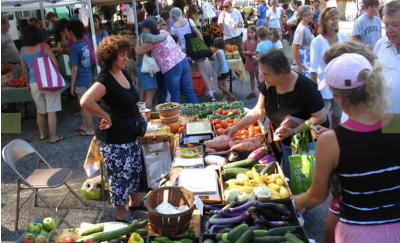
And if you need any other convincing, I’m here to help. I have a long, long list of things I love about these neighborhoods- cool restaurants, great coffee spots, tiny porch concerts, walkability, diversity, South of the James Farmer’s Market, art, and true character that rejects a lot of the homogeneous modernity you find elsewhere. You might not get the magic of Mrs. D. slipping out the back door to get fresh mint for your tea, but you can build your own magic in one of these beautiful, storied, tree-lined streets.
Have you spent time in Westover Hills or Woodland Heights? And if you’re thinking about a move to the Southside, what questions can I answer? I’ve been living and selling homes in this city for more than 20 years. I know where the good canelés are.