


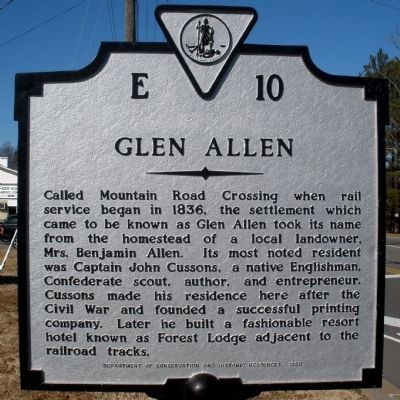
Source: The Historical Marker Database, https://www.hmdb.org/m.asp?m=15821
Old Glen Allen VA: The Neighborhood With More History Than You’d Expect
Most people drive through Old Glen Allen on their way somewhere else. They pass the old schoolhouse, the tavern, the little 1940’s gas station frozen in 1940, and they keep going north toward the interstate or south toward Short Pump, not quite registering that they’ve just passed through a mile of genuinely remarkable American history. Let’s check it out a bit.
How Glen Allen Got Its Name
Before it was Glen Allen, it was called Mountain Road Crossing. That was the working name when rail service began here in 1836, connecting this stretch of Henrico County to Richmond and points north via the Richmond, Fredericksburg and Potomac Railroad.
The area got its current name during the Civil War, from the homestead of the widow Mrs. Benjamin Allen, who operated a small post office for her neighbors out of her home. In military dispatches, Union soldiers called it “Allen’s Crossing” because the Allen property served as a landmark for troops fighting in the area.
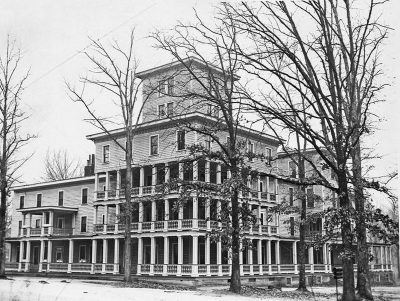
Forest Lodge (1940s) | Source: Historical Marker Database, https://www.hmdb.org/m.asp?m=24601
And here’s where the story gets interesting. Mrs. Allen later married Captain John Cussons, a native Englishman, former Confederate scout, author, and entrepreneur, who settled here after the war and founded a successful printing company that employed up to 50 workers at its peak. Cussons, apparently not a man who did things halfway, then built Forest Lodge in 1881, a grand hotel with over 100 rooms intended to attract tourists via the nearby railroad, though it ultimately failed financially. The remains of Forest Lodge still sit along the Mountain Road corridor, holding their ground next to a CVS and a storage facility (poignant or funny, depending on your disposition, but I feel it’s a little of both).
General Sheridan’s Union cavalry column of 12,000 horsemen passed through the area on the morning of May 11, 1864, spreading out to destroy miles of railroad track before encountering J.E.B. Stuart’s forces nearby, which brought on the Battle of Yellow Tavern. The ground under Old Glen Allen’s established subdivisions has seen some things.
The School on the Second Floor
Glen Allen School was founded in 1886 by Elizabeth Jane Holladay, known locally as Miss Lizzie, who was 38 years old when she began teaching children on the second floor of her simple frame home on Mountain Road. By 1899 the community had grown enough to warrant an actual schoolhouse. By 1911, a proper brick building with a bell tower and a cast iron bell weighing more than 150 pounds had been built to replace it. The school kept expanding through the 1930s, added an auditorium, a gymnasium, and a home economics cottage, and served the community until 1978. It reopened in 1999 as the Cultural Arts Center at Glen Allen, now a 50,300-square-foot multiuse space hosting theater groups, art exhibits, classes, concerts, and community events. Miss Lizzie would probably enjoy knowing the bell and its tower are still there.
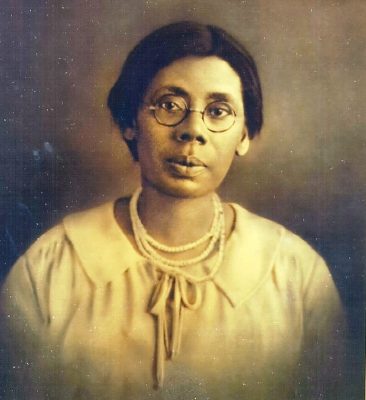
Virginia Randolph | Source: Henrico County, https://henrico.gov/history/historical-figures/virginia-e-randolph/
Virginia Randolph: A Bigger Story Than Most People Know
Along Mountain Road sits a small museum that deserves considerably more attention than it typically gets. (The story of small museums, I suppose.)
Virginia E. Randolph was born to formerly enslaved parents and made her early career as an educator in Henrico County. In 1908, she was chosen by the Henrico County supervisor to develop a model program of vocational teacher training and supervision. Under the auspices of the Jeanes Foundation, the methods and plans she developed in Henrico County eventually achieved internationally widespread adoption.
The Virginia Randolph Training School, established in 1915, was the first publicly supported academic high school for African American students in Virginia. The museum dedicated to her legacy is a National Historic Landmark, and her remains are interred on the grounds. (She didn’t rest on her laurels, either, teaching in Henrico County schools until her retirement in 1949.
The Gas Station Where Everyone Knew Your Name
The Courtney Road Service Station was built around 1925 and was known in the 1940 Richmond telephone directory as the “Friendly Service Station.” Owned by the Barlow family and operated by Mr. Wiltshire, it was the kind of mid-century filling station designed to look like a home, where locals could pick up groceries, a cold beer, and catch a ball game on the radio.
Henrico County had it restored and placed it at the corner of Courtney Road and Mountain Road for public display. Step inside and there’s a glass countertop, a vintage radio on the windowsill, and the specific feeling of a Saturday morning in 1942. It is, unexpectedly, a delight.
The Courtney Road station is part of a mile-long historic corridor along Mountain Road that also includes Meadow Farm Museum, the Cultural Arts Center, the remains of Forest Lodge, and Walkerton Tavern, all restored properties owned and maintained by Henrico County. That the county has been this deliberate about preservation, given the development pressure that has transformed everything around it, says something.
Walkerton Tavern and Meadow Farm
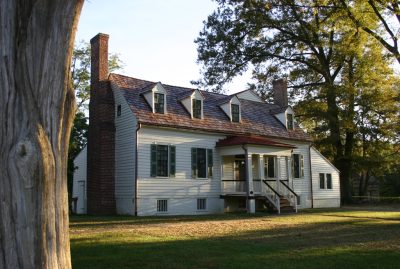
Meadow Farm Museum | Source: Henrico County, https://henrico.gov/rec/places/meadow-farm/
Walkerton Tavern was built by John Walker between 1824 and 1825 and has served as a tavern and possibly a field hospital for wounded Union cavalrymen in 1864. It is available for private events today, which means you can host a wedding reception in a building that once held casualties from the Battle of Yellow Tavern.
Meadow Farm, a preserved 1810 farmstead, is best known for its connection to Gabriel’s Rebellion, the 1800 slave uprising planned by Gabriel Prosser. It is listed on both the National Register of Historic Places and the Virginia Landmarks Register. The museum offers living history demonstrations and farm animal exhibits, with the grounds open daily.
The Neighborhood Today
Old Glen Allen, the historic village core along Mountain Road and the surrounding residential areas, offers buyers something the rest of Henrico County’s newer suburbs cannot quite replicate: established neighborhoods with mature landscaping, larger lots, and a sense of having been lived in for long enough to have genuine community character.
Older homes near Glen Allen’s historic Mountain Road core, some dating to the early-to-mid 20th century, can be found in the $325,000 to $425,000 range, offering larger lots than newer subdivisions, with established neighborhoods from the 1980s and 1990s such as Wellington Farm listing four-bedroom homes between $380,000 and $475,000.
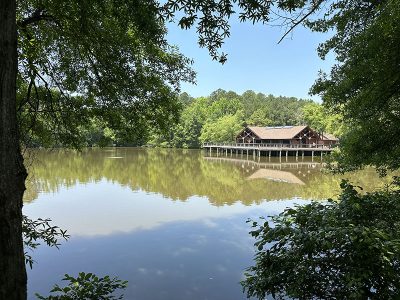
Three Lakes Park and Nature Center | Source: Virginia DWR, https://henrico.gov/rec/places/meadow-farm/
Glen Allen’s standout amenity is Three Lakes Park and Nature Center, a 300-acre county park with three connected lakes, a boardwalk aquarium building, fishing piers, and miles of walking trails, all free to the public. It is one of the great underappreciated parks in the Richmond region and tends to surprise people who stumble onto it for the first time.
The school picture: Glen Allen High School offers an International Baccalaureate program and ranks among the top schools in Henrico County. The feeder schools throughout the area consistently perform well within an already strong county system.
Glen Allen’s price per square foot averages roughly $235, generally $10 to $15 less per square foot than comparable homes in neighboring Short Pump, with Henrico County’s consistently competitive real estate tax rate. For buyers who want the Henrico County school system, established neighborhood character, proximity to Three Lakes Park, and slightly more breathing room than Short Pump’s more densely developed corridors, Old Glen Allen makes a compelling case for itself.
And if you want to understand what you’re moving into before you sign anything, take a slow drive down Mountain Road first. Stop at the Cultural Arts Center. Read the historical marker outside the old gas station. Hit up the Glen Allen Super Market for a cold drink, a hot lunch, a six pack, or some local corn (or maybe a home baked piece of pie!). Want something a little different? Check out Con Salsa Venezuelan and get something delicious- from delicious fresh pressed juices, arepas, empanadas, bowls, and more. So good!
Then walk past what’s left of the grand hotel that a Confederate-scout-turned-printer built next to a railroad track in 1881, convinced that tourists would come.
They may not have come then, but they’re definitely coming now.
Thinking about a move to Glen Allen or the broader Henrico County area? I’ve been covering this market for more than 20 years and know it in detail. What questions can I answer?